
 Myofascial
Release
Myofascial
Release
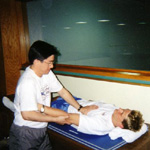
It is a gentle blend of stretching and massage. Myofascial release therapy uses hands-on manipulation of the entire body to promote healing and relieve pain. Just as its name suggests, myofascial comes from the Latin "myo" for muscle and "fascia" for band. Therapists use the technique to ease pressure in the fibrous bands of connective tissue, or fascia, that encase muscles throughout the body. Sheaths of this dense and elastic connective tissue weave about blood vessels, bones, and nerves as well, forming an intricate, 3-D web that supports your organs and joints from head to toe and acts as the body's shock absorber.
According to practitioners of myofascial release, scarring or injury to this network of connective tissue is a major cause of pain and impeded motion. The easy stretches that are integral to this therapy, aim to alleviate these problems by breaking up, or "releasing," constrictions or snags in the fascia. People with longstanding back pain, fibromyalgia, recurring headaches, sports injuries, and a host of additional complaints are all said to benefit from the technique.
The gentle and sustained stretching of myofascial release is believed to free these adhesions and soften and lengthen the fascia. By freeing up fascia that may be impeding blood vessels or nerves, myofascial release is also said to enhance the body's innate restorative powers by improving circulation and nervous system transmission.
Whereas muscles often respond to the firm strokes and thrusts of massage, fascia is thought to respond to a much milder touch. Myofascial release works on a broader swath of muscles and connective tissue. The movements have been likened to kneading a piece of taffy--a gentle stretching that gradually softens, lengthens, and realigns the fascia.
The stretch may be held for one to two minutes, and sometimes for up to five minutes, before a softening, or "release," is felt. The release indicates that the muscle is relaxing, fascial adhesions are slowly breaking down, or the fascia has been realigned to its proper orientation. The process is then repeated until the tissues are fully elongated.